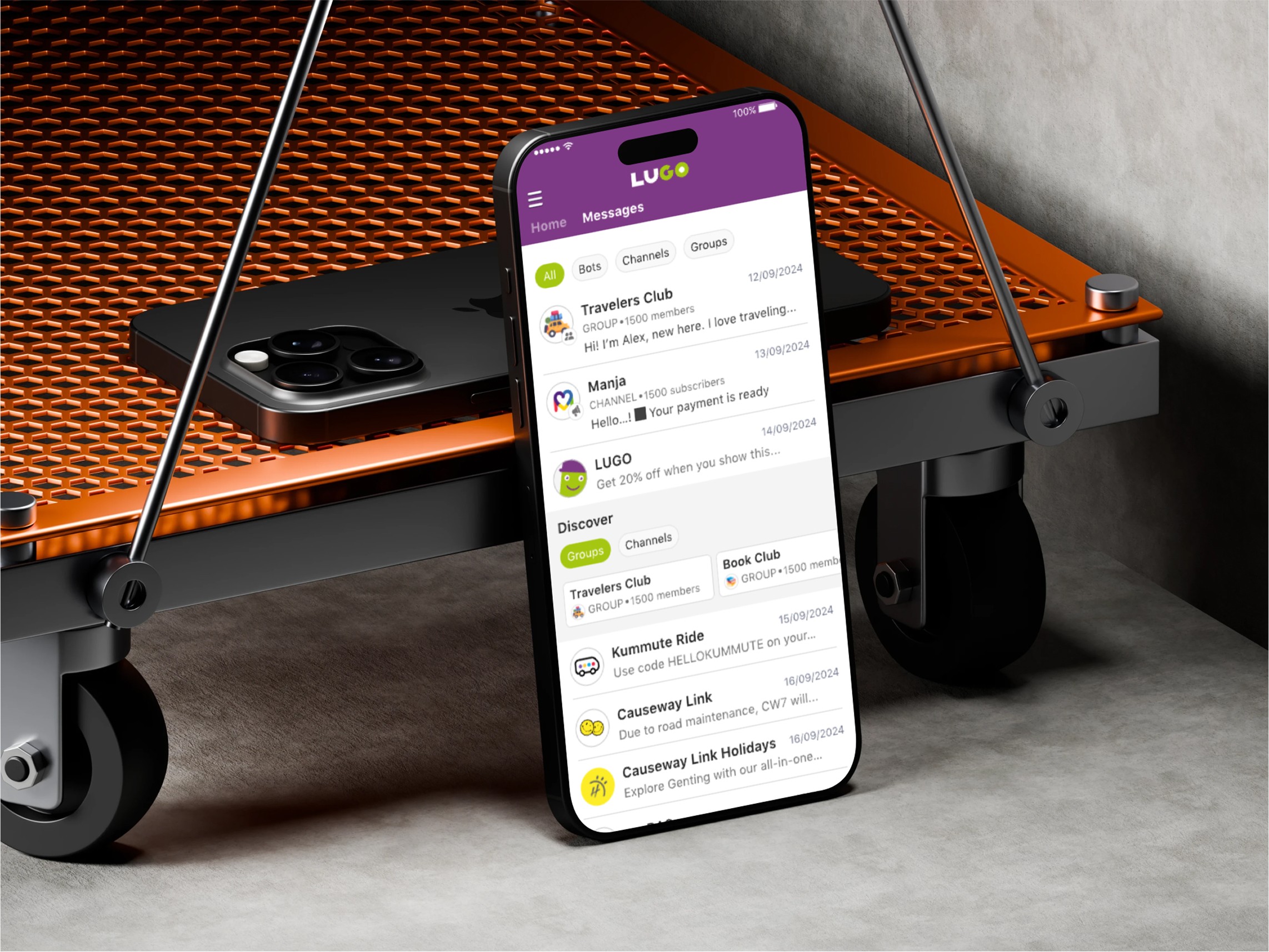
Kummute App – Seamless Cross Border Taxi Booking

Designing a mobile booking experience that makes licensed cross-border travel between Singapore and West Malaysia safe, transparent, and effortless, ensuring reliable drivers and smooth, worry free journeys for every passenger
Role

Senior UX/UI Designer

Role

Senior UX/UI Designer

Role

Senior UX/UI Designer

Industry

Transportation

Industry

Transportation

Industry

Transportation

Duration

4 months

Duration

4 months

Duration

4 months

a cell phone on a table

Stage 1 – Market Research & Analysis

  • Goal:

    Understand the needs of travelers moving between Singapore and West Malaysia and pinpoint gaps in existing ride-hailing and taxi services.


  • Activities:

    • Competitor benchmarking of regional ride-hailing platforms and government-licensed taxi services.

    • Surveys and interviews with daily commuters, weekend travelers, and tourists to uncover pain points such as unclear pricing, lack of safety assurance, and confusing booking steps.


  • Insights:

    • Safety and legality were top concerns—users wanted licensed, insured drivers.

    • Many travelers found it difficult to compare pick-up/drop-off options or track their ride across the border.

    • Pricing transparency and 24/7 availability were key factors influencing trust and adoption.


Stage 2 – Concept Development & User Flow Design

  • Vision: Provide a trust-first, friction-free booking experience for licensed cross-border taxis.

  • Personas: Created three core personas—daily commuters, occasional family travelers, and tourists—to guide priorities.

  • User Flows:

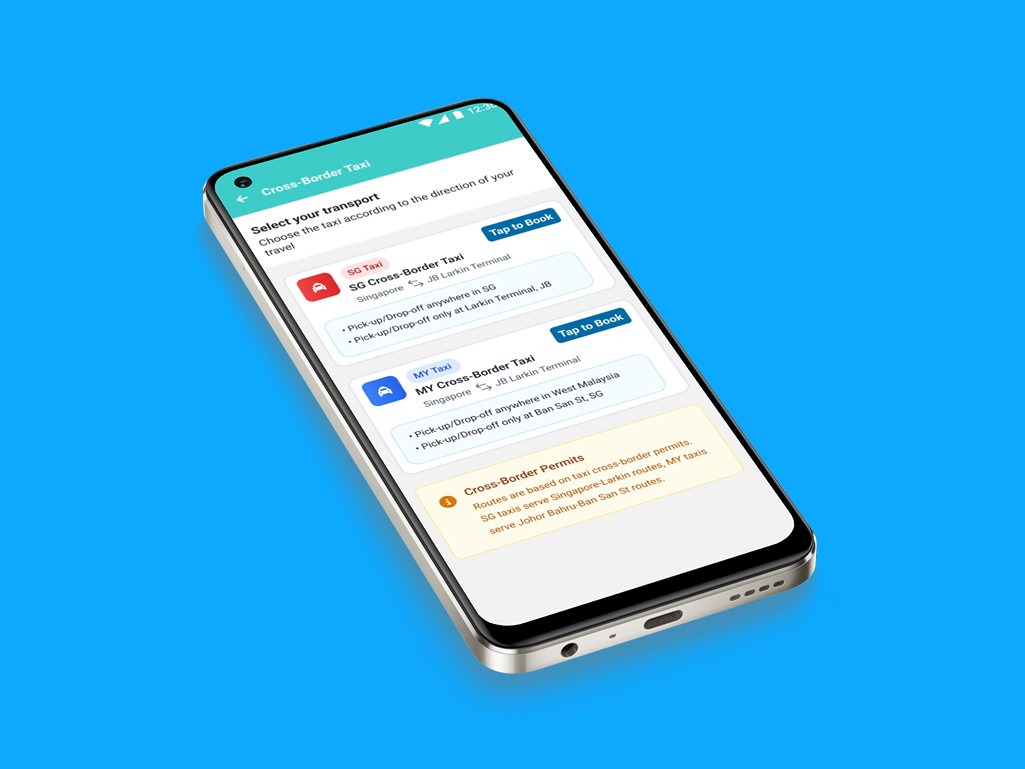
    • Pick-up & Drop-off selection (Singapore ↔ West Malaysia).

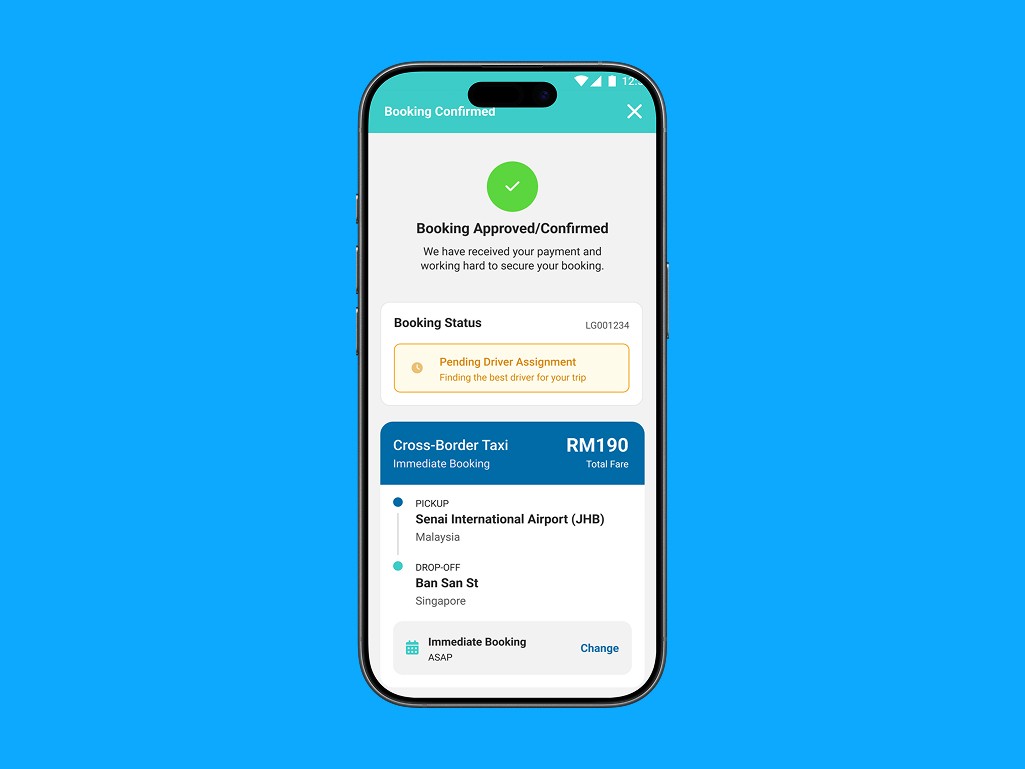
    • Quick verification & booking confirmation.

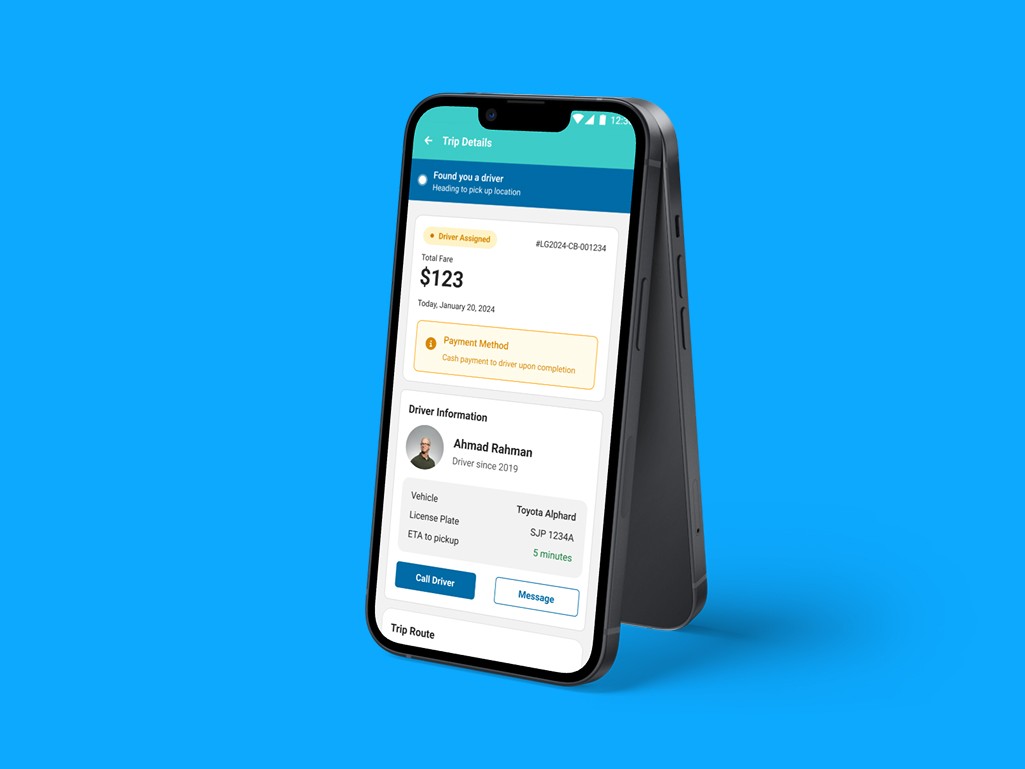
    • Real-time tracking from start to destination.

  • Designed a three-step flow—Select → Verify & Confirm → Track & Travel—keeping interactions minimal and intuitive.


Stage 3 – UI Design & Prototyping

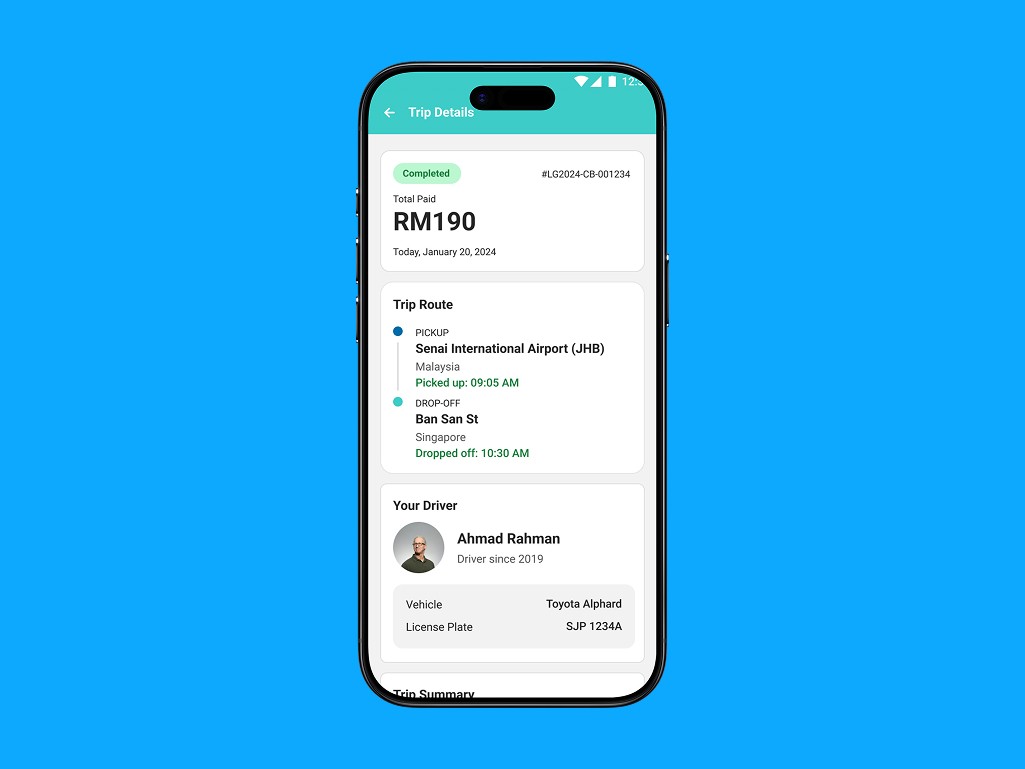
  • Wireframing: Sketched and tested low-fidelity layouts emphasizing hierarchy of actions: location selection, service highlights, and “Book” CTA.

  • High-Fidelity Prototypes: Built in Figma using a fresh teal primary palette to distinguish this service from other transport apps and convey reliability.

  • Key Visual Decisions:

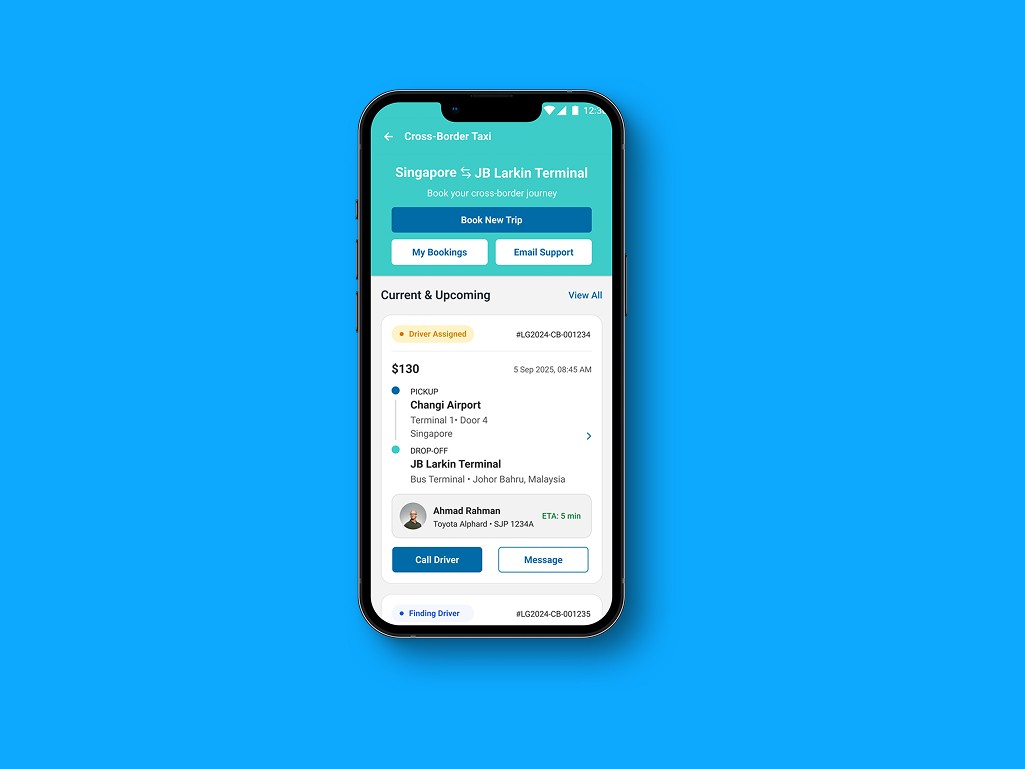
    • Card-based sections for “Pick-up & Drop-off Locations” clearly separating Singapore and West Malaysia routes.

    • Prominent trust markers—Safe & Secure and 24/7 Service—with concise icons.

    • A bold bottom-anchored Book a CB Taxi button for clear call-to-action.

  • Created an interactive prototype to demonstrate real-time transitions, micro-animations, and error states.

Stage 1 – Market Research & Analysis

  • Goal:

    Understand the needs of travelers moving between Singapore and West Malaysia and pinpoint gaps in existing ride-hailing and taxi services.


  • Activities:

    • Competitor benchmarking of regional ride-hailing platforms and government-licensed taxi services.

    • Surveys and interviews with daily commuters, weekend travelers, and tourists to uncover pain points such as unclear pricing, lack of safety assurance, and confusing booking steps.


  • Insights:

    • Safety and legality were top concerns—users wanted licensed, insured drivers.

    • Many travelers found it difficult to compare pick-up/drop-off options or track their ride across the border.

    • Pricing transparency and 24/7 availability were key factors influencing trust and adoption.


Stage 2 – Concept Development & User Flow Design

  • Vision: Provide a trust-first, friction-free booking experience for licensed cross-border taxis.

  • Personas: Created three core personas—daily commuters, occasional family travelers, and tourists—to guide priorities.

  • User Flows:

    • Pick-up & Drop-off selection (Singapore ↔ West Malaysia).

    • Quick verification & booking confirmation.

    • Real-time tracking from start to destination.

  • Designed a three-step flow—Select → Verify & Confirm → Track & Travel—keeping interactions minimal and intuitive.


Stage 3 – UI Design & Prototyping

  • Wireframing: Sketched and tested low-fidelity layouts emphasizing hierarchy of actions: location selection, service highlights, and “Book” CTA.

  • High-Fidelity Prototypes: Built in Figma using a fresh teal primary palette to distinguish this service from other transport apps and convey reliability.

  • Key Visual Decisions:

    • Card-based sections for “Pick-up & Drop-off Locations” clearly separating Singapore and West Malaysia routes.

    • Prominent trust markers—Safe & Secure and 24/7 Service—with concise icons.

    • A bold bottom-anchored Book a CB Taxi button for clear call-to-action.

  • Created an interactive prototype to demonstrate real-time transitions, micro-animations, and error states.

a cell phone on a white block
two cell phones on a gray surface

Stage 4 – User Testing & Iteration

  • Conducted five remote usability sessions and three in-person tests with commuters and tourists.

  • Findings:

    • Users appreciated the simplicity but wanted more clarity on peak-period pricing and travel times.

    • Some participants suggested stronger emphasis on licensing and insurance details for reassurance.

  • Iterations Implemented:

    • Enlarged and repositioned safety icons and copy for better visibility.

    • Added a subtle note beneath the CTA—“Do cater for extra travelling time during peak period.”

    • Refined typography and spacing for better readability on small screens.


Stage 5 – Final Presentation & Handoff

  • Compiled a comprehensive design report detailing research insights, persona development, user flows, wireframes, and final UI.

  • Delivered a component-based design system and redlines in Figma for developer handoff.

  • Partnered with engineering during QA to maintain pixel-perfect fidelity and optimal performance across Android and iOS.
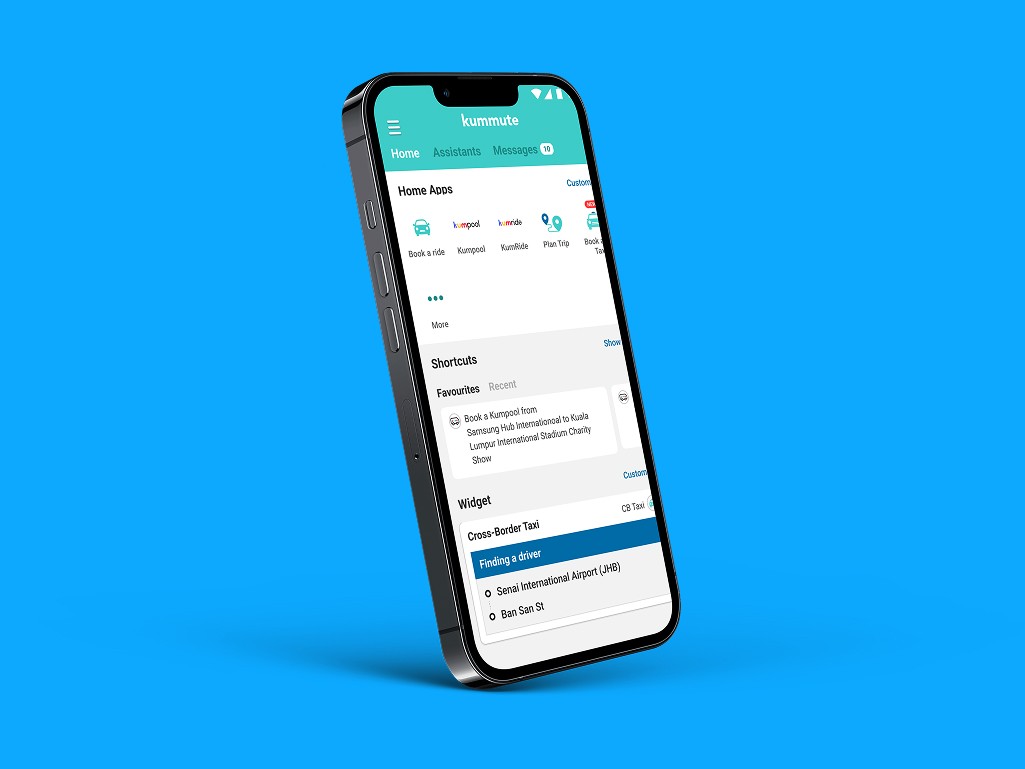
a cell phone leaning on a ledge
a pair of cell phones on a concrete block
a cell phone with a yellow rectangular screen

Outcomes

  • Increased User Confidence: Post-launch analytics and pilot feedback showed a measurable rise in bookings attributed to improved trust indicators (licensed & insured drivers, safety messaging).

  • Streamlined Booking Flow: Average booking completion time decreased significantly compared to early prototypes.

  • Positive Reception: Test users praised the clean layout and clarity of pick-up/drop-off information.


Reflections

This project underscored the power of user-centered design in regulated transportation. By grounding every decision in research and iterative testing, we created a booking experience that feels safe, transparent, and effortless.
I strengthened my skills in market analysis, multi-stakeholder collaboration, and building a trust-first design system—key competencies for high-stakes mobility products.

Outcomes

  • Increased User Confidence: Post-launch analytics and pilot feedback showed a measurable rise in bookings attributed to improved trust indicators (licensed & insured drivers, safety messaging).

  • Streamlined Booking Flow: Average booking completion time decreased significantly compared to early prototypes.

  • Positive Reception: Test users praised the clean layout and clarity of pick-up/drop-off information.


Reflections

This project underscored the power of user-centered design in regulated transportation. By grounding every decision in research and iterative testing, we created a booking experience that feels safe, transparent, and effortless.
I strengthened my skills in market analysis, multi-stakeholder collaboration, and building a trust-first design system—key competencies for high-stakes mobility products.

Other projects

Create a free website with Framer, the website builder loved by startups, designers and agencies.